Live Dealer Stream Keeps Buffering on Mobile Data: What Is Happening?
In recent years, live dealer streams have revolutionized the online casino experience by bringing the excitement of a real casino right to your fingertips. Whether you’re using online casino apps or mobile websites, these streams rely on sophisticated multi-camera studio production setups to deliver immersive gameplay. However, one persistent issue users face, especially on mobile data, is buffering and stream interruptions. What causes these hiccups and how can operators optimize the experience?
In this article, we break down the technical and practical factors affecting live dealer streaming on mobile data, hardwaretimes.com with insights from industry leaders such as Hardware Times and MRQ (mrq.com). We also tap into standards and best practices from the Society of Motion Picture and Television Engineers (SMPTE) to understand the challenges and solutions around encoding, adaptive streaming, and bandwidth management.
Understanding the Multi-Camera Studio Production for Live Dealers
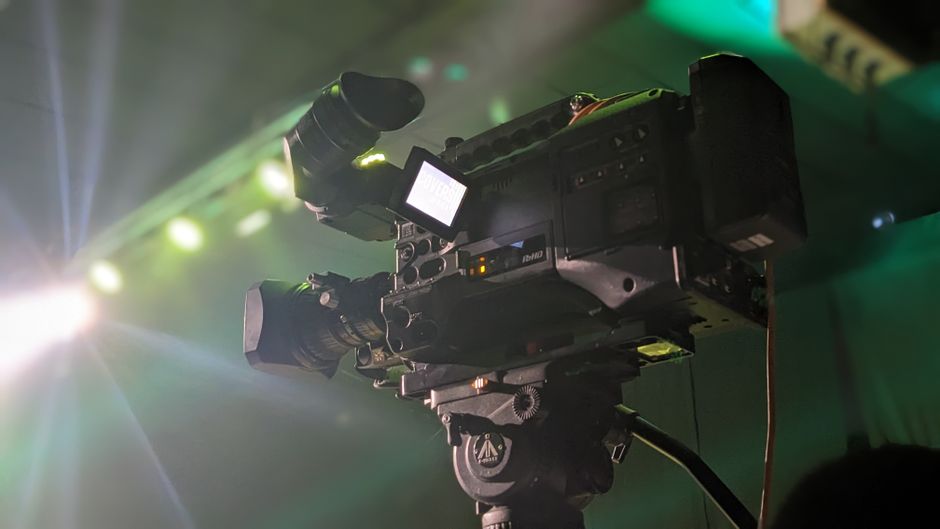
Live dealer streams don’t just use a single camera feed. Instead, studios deploy multiple cameras to capture different angles — the dealer’s hands, the table, players’ reactions, and more. This multi-camera approach provides an immersive and dynamic viewing experience but also introduces complexity in production and streaming.
- Camera switching and synchronization: Seamless switching between camera angles requires precise synchronization and coordination to prevent lip-sync or action lag.
- Lighting and visual consistency: Well-calibrated lighting is crucial to avoid flicker, glare, or shadows that can degrade video quality, especially on small mobile screens.
- Bandwidth considerations: Each additional camera feed demands extra data resources at the source, which must be carefully encoded and compressed for real-time distribution.
Hardware Times recently evaluated leading live streaming setups and emphasized that "lighting and multi-angle consistency are often overlooked but vital for both quality and encoding efficiency."

Lighting and Visual Consistency: Why It Matters for Mobile
Live dealer streams are typically viewed on a variety of devices, with mobile phones making up a significant share of the audience. Poor lighting doesn’t just affect aesthetics; it complicates compression algorithms and can increase perceived latency or artifacting.
When lighting changes abruptly or isn’t even, encoding algorithms struggle to maintain quality without increasing bitrate, which can lead to increased buffering, especially on limited mobile data connections.
Therefore, studios invest in controlled lighting setups that ensure consistent exposure and color balance. SMPTE guidelines also emphasize colorimetry and luminance standards to enhance video clarity across devices.
Mobile-First Streaming Constraints: The Reality of Bandwidth Drops
Buffering issues on mobile data networks often stem from the inherent variability of wireless bandwidth. Mobile networks experience frequent congestion, signal fluctuations, and varying signal strength based on location, time of day, and device quality.
Bandwidth drops are a primary culprit. When a mobile device suddenly experiences a dip in available throughput, the stream’s data rate can exceed the network’s capacity, causing buffer underruns and stalling.
MRQ’s recent report highlights that "mobile users should expect transient bandwidth drops of up to 30-50% during peak hours, which necessitates robust adaptive streaming strategies."
- Network handoffs: Switching between 4G towers or from 4G to 3G affects data throughput dramatically.
- Signal interference: Physical obstructions like buildings or even weather conditions create unpredictable losses.
- Concurrent usage: Many users on the same cell tower reduce bandwidth availability per user.
How Adaptive Streaming Handles Bitrate Switching
Adaptive streaming protocols like HLS (HTTP Live Streaming) and DASH (Dynamic Adaptive Streaming over HTTP) are critical tools in ensuring smooth playback. They work by providing multiple quality renditions of the same content and switching between them in real time based on network conditions.
This bitrate switching means that when bandwidth drops, the player selects a lower-bitrate stream which demands less data, reducing buffering. When bandwidth improves, it switches back up to higher quality.
However, this smooth experience depends on several factors:
- Segment length: Shorter segments enable faster bitrate switching but increase processing overhead.
- Buffer size management: Having just enough buffer to absorb fluctuations without causing long delays is a fine balance.
- Encoding efficiency: More efficient codecs reduce required bitrate for a given quality, easing bandwidth demands.
SMPTE’s recent publications detail best practices in encoding ladder design to optimize streaming performance for bandwidth-constrained devices.
Encoding and Compression: The Backbone of Low-Latency Live Streaming
Encoding in live dealer streams must balance multiple competing objectives: low latency, high quality, and minimal bandwidth.
Studies from Hardware Times and MRQ underscore the importance of modern codecs such as H.265 (HEVC) or AV1 which outperform legacy codecs like H.264 by approximately 30-50% in compression efficiency.
For mobile streaming, efficient compression is critical to stay under bandwidth limits while delivering crisp, artifact-free video. But encoding is compute-intensive. What happens when the encoder hardware overheats at hour 9 of continuous broadcasting?
- Hardware reliability: Enterprises must carefully choose encoder hardware rated for 24/7 operation and implement cooling and redundancy.
- Encoding presets: Using faster encoding presets lowers CPU load but sacrifices compression efficiency.
- Multi-bitrate output: Encoders must generate multiple bitrate streams simultaneously for adaptive streaming without dropping frames.
MRQ’s hardware assessments recommend using vendor-grade encoder appliances with built-in load balancing and thermal monitoring to avoid unexpected shutdowns that ruin viewer experience.
Key Takeaways
- Multi-camera, multi-angle production offers immersive live dealer streams but demands careful synchronization and lighting consistency.
- Mobile data networks are inherently variable, so bandwidth drops cause buffering unless adaptive bitrate switching is efficiently implemented.
- Encoding efficiency and robust hardware are critical to balancing low latency, high quality, and long streaming sessions.
- Following industry standards such as SMPTE ensures the technical quality and interoperability of the stream across diverse devices.
What Can Operators Do to Reduce Mobile Buffering?
- Invest in studio infrastructure: Optimize lighting and camera setup for consistent visuals to ease encoding.
- Employ adaptive streaming: Implement fine-tuned bitrate ladders and segment durations tailored to mobile network conditions.
- Monitor network performance: Use real-time analytics to detect bandwidth drops early and adjust stream quality proactively.
- Use reliable encoding hardware: Choose proven providers, such as those evaluated by Hardware Times and MRQ, with proper cooling and redundancy.
- Test on real mobile environments: Since spec sheets don’t capture all network conditions, on-the-ground testing with real mobile devices is imperative.
Final Thoughts
Buffering in live dealer streams on mobile data isn’t a simple “fault” but a result of layered challenges: production complexity, real-world mobile network variability, adaptive streaming mechanics, and encoding choices. Understanding these components helps operators and developers deliver smoother, more enjoyable gaming experiences.
Looking ahead, emerging technologies like 5G and more efficient codecs promise improvements, but the fundamental principle remains: no matter the tech, it’s about designing resilient systems that consider user environment realities. In the words of SMPTE’s guidelines, “the best stream is one that adapts seamlessly to its audience's needs, wherever they are and whatever device they hold.”
For detailed reviews on encoder hardware and streaming solutions fit for the demanding live dealer environment, visit MRQ and check out expert insights from Hardware Times.